
'Only the Dalai Lama could have kept the Tibet issue alive the way he did.'
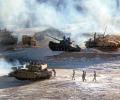
While tensions have eased at several friction points and mechanisms for managing the boundary have been reactivated, underlying differences persist. Disputes over naming practices in Arunachal Pradesh, continued infrastructure development on both sides, and unresolved questions regarding patrolling rights indicate that the structural gap remains, notes Dr Kumar.
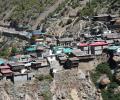
On August 5, 1953, Jawaharlal Nehru sent a strange note to the foreign secretary. It is worth mentioning because it was symptomatic of the lack of knowledge about Western Tibet in India and in South Block in particular, notes Claude Arpi.

The southwest monsoon has advanced across northern Indian states, leading to widespread rainfall, waterlogging, road blockages, and rain-related deaths, particularly in Himachal Pradesh and Rajasthan. The Centre is monitoring the situation, especially concerning potential drought conditions in some areas due to the El Nino effect.

'Nehru was an idealist, he was certainly a visionary in one way, but Mao Zedong was not. Mao Zedong was a very down-to-earth strategist. He wanted to take Tibet, to take the plateau, to take the rivers, to take the minerals.'
Discover the only way to travel, where fun meets fitness!

Nepal's Prime Minister Balendra Shah addressed parliament on the ongoing border dispute with India, stating both countries have agreed to seek resolution through diplomatic means and expert consultation. Shah's remarks about Nepal also encroaching on Indian territories have sparked controversy.

Nepal has reiterated its commitment to resolving the border issue with India through diplomatic channels, emphasising historical agreements and understanding.

India has strongly criticised China's practice of assigning 'fictitious names' to areas within Indian territory, stating that such actions are futile attempts to alter reality and negatively impact efforts to normalise bilateral relations.

India has firmly rejected Nepal's objection to the upcoming Kailash Mansarovar Yatra via the Lipulekh Pass in Uttarakhand, dismissing Kathmandu's territorial claims over the region.

Border trade between India and China through the Lipulekh Pass in Uttarakhand's Pithoragarh district is set to resume this year after a six-year hiatus due to the COVID-19 pandemic.
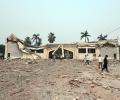
'We won not (only) because we were able to carry out long-range precision strikes.' 'That is, of course, one of the reasons but we had better situational awareness about what's happening than Pakistan.'

Last year, the trade could not take place, for the first time since 1992, due to protests in Tibet in the wake of the Beijing Olympics. This year China has not given its permission so far heightening suspense over resumption of the trade at Taklakot mart in Tibet.

'China continues to perceive its relations with India through the prism of India-US relations, with the US using India to counter balance against China in the Indo-Pacific and beyond.'
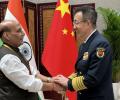
China has called Tibet-related issues a 'thorn' in India-China bilateral relations and a 'burden' for New Delhi, ahead of External Affairs Minister S Jaishankar's visit to China.

China is set to build a rail link connecting Xinjiang province with Tibet, part of which will run near the Line of Actual Control (LAC) with India.

'People are talking about Vijay Crishna's roles in cinema, the few roles that he did, but his real body of work was on stage.'
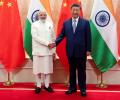
'China's basic purpose of taking the Shaksgam Valley was access to the Indian Ocean.'

If Xi Jinping can establish control over the PLA Ground Force, relations between India and China will settle down to an even keel. The next few weeks will show whether Xi has finally succeeded in gaining control over the PLA Ground Force. That could bring about the substantive shift in India-China relations that both our leaders have been working for, observes Ambassador Prabhat Shukla.
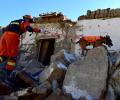
Local officials said no casualties have been reported due to Wednesday's quake that hit the Madoi County in Golog Tibetan Autonomous Prefecture of Qinghai province of northwest China at 3:44 pm (Beijing time), tremors for which were also felt in north-eastern Nepal.

Indian security agencies have continued efforts to reinforce the Siliguri Corridor through improved infrastructure, faster mobilisation capability and diversified connectivity routes to the north east.
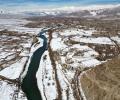
China and Pakistan concluded their strategic dialogue, reiterating their opposition to unilateral actions in South Asia and discussing Kashmir, Afghanistan, and trilateral cooperation.
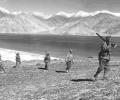
As India and China continue to face off across the Himalayas six decades later, the echoes of that earlier conflict remain unmistakable. The core of China's sensitivity lies not in maps or mountain passes, but in its perception of sovereignty over Tibet, points out Dr Kumar.

India emerged from the war militarily bruised and strategically altered. The United States, under the guise of friendship, had succeeded in achieving what open alignment never could: The psychological and political repositioning of India within the Cold War order, points out Dr Kumar.

Tintin Stays Timeless. From his earliest appearances to the extraordinary stories that followed, Tintin's journey is one of imagination and curiosity.
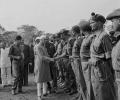
The well-fought defensive battles in Aksai Chin and eastern Arunachal, in remote and forbidding locations such as Galwan, Rezang La, Gurung Hill and Walong, effectively halted Chinese advances not once but twice during the campaign. These engagements, fought with grit and without adequate support, were not immediately known to the world in 1962, points out Dr Kumar.

'It is a breathtaking journey towards the Tibet border, especially since the Border Road Organisation has accomplished a fabulous feat in black-topping the road till the border.' 'One is left with a salute for the dauntless Indian soldiers who spend the winter in these majestic, though inhospitable areas (we were told that the temperature comes down to minus 40 in winter),' recounts Claude Arpi.
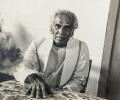
What appeared to be a generous act of friendship was, in truth, a manoeuvre within a much larger strategic game. The United States used the 1962 war not just to aid India but to test how far it could be pulled into the Western fold, points out Dr Kumar.

The epicentre was located in Tsogo Township of Dingri County, which has a population of approximately 6,900 people within a 20-km radius. There are 27 villages within this area.
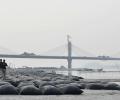
China has formally started the construction of a USD 167.8 billion dam over the Brahmaputra River in Tibet, close to the Indian border in Arunachal Pradesh, raising concerns in India and Bangladesh.

China refutes allegations of harassment of an Indian woman from Arunachal Pradesh at Shanghai airport, claiming actions were lawful and reiterating its claim over the region.

If Patel had lived a few years more, he may or may not have become prime minister. But for sure, his presence would have kept Nehru in check, points out Harishchandra.
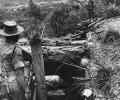
On November 18, 1962, 114 soldiers of the 13th Kumaon fought till the last man, and last bullet, in sub-zero temperatures, to beat back the huge Chinese army. We salute the Heroes of Rezang La.

China has objected to Indian Minister Kiren Rijiju's remarks on the Dalai Lama's reincarnation, urging India to be cautious on Tibet-related issues to avoid impacting bilateral relations. China insists any future Dalai Lama must receive its approval.

The fierce battles of Galwan, Rezang La, Gurung Hill, and Walong taught the PLA a hard lesson: Fighting the Indian Army would never be easy or inexpensive.

'Although China has been ruling over Tibet for past 75 years, it has no legitimacy.'

The MiG-21 episode demonstrates that procurement is always strategic.
Choices about what aircraft to acquire, who builds them, who supplies the spares, who trains the pilots and technicians are decisions with political consequences lasting for decades.
'If they can be duplicitous, we can be equally duplicitous.' 'If they offer friendship, we reciprocate.' 'If they choose hostility, we respond with equal hostility.'
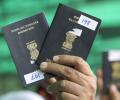
An Arunachal Pradesh woman was allegedly detained at Shanghai airport for nearly 18 hours after Chinese immigration officials refused to recognise her Indian passport, claiming Arunachal Pradesh is part of China.
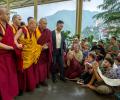
India has stated its neutral stance on religious matters following the Dalai Lama's announcement of his succession plan, which China has rejected. The statement comes as the Dalai Lama approaches his 90th birthday, with China urging India to exercise caution on Tibet-related issues.
